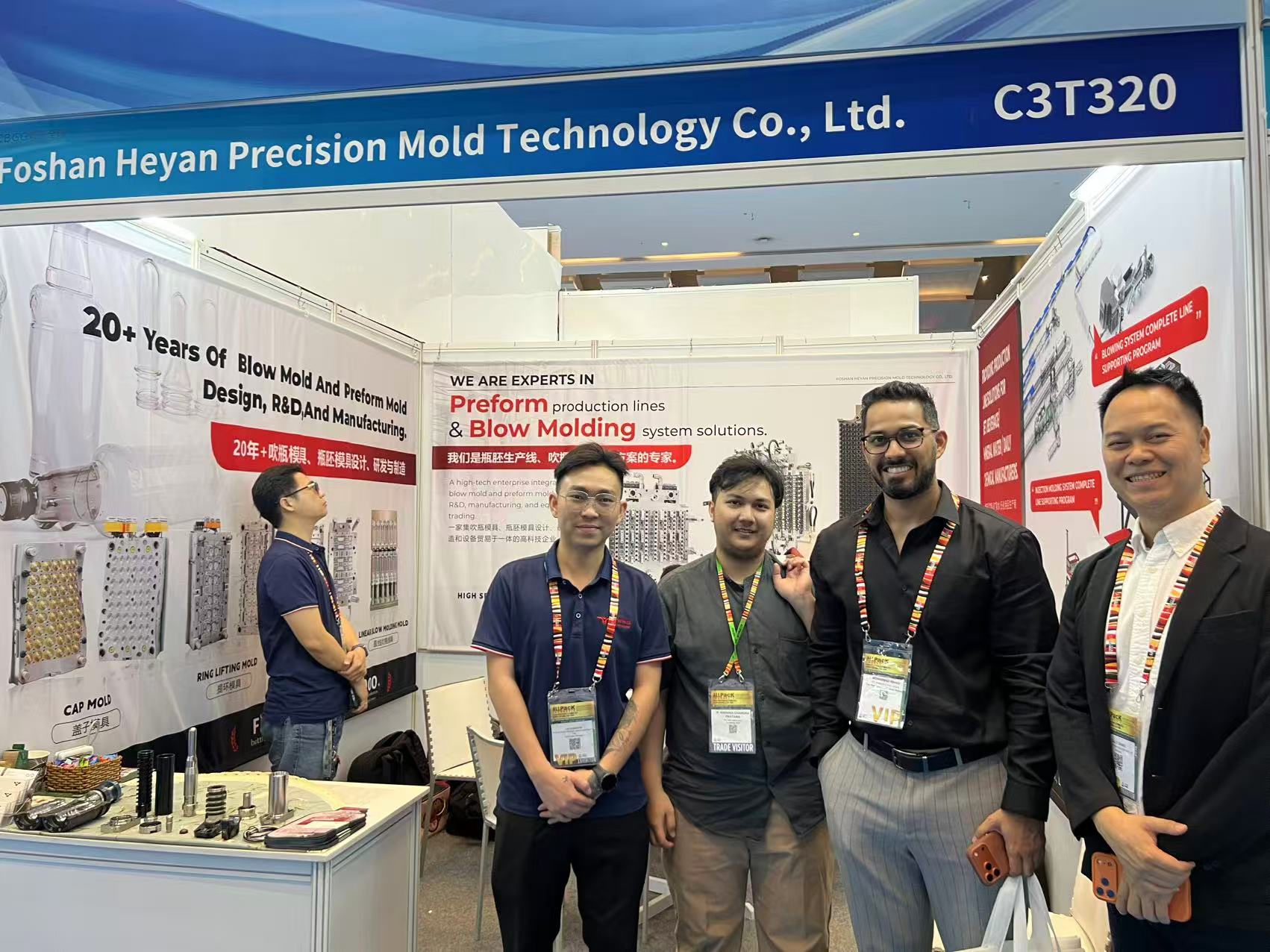
When sourcing PET preform molds from overseas, the most common question buyers ask is: what is the real lead time? Vendors often quote 4–6 weeks, but reality frequently stretches to 12–16 weeks or more. Understanding the actual PET preform mold lead time China suppliers work with helps you plan production schedules, avoid line stoppages, and maintain bottle inventory without over-ordering. This guide breaks down each phase of mold manufacturing, identifies the factors that cause delays, and explains how to protect your project timeline.
Typical PET Preform Mold Lead Time Breakdown
A standard multi-cavity PET preform mold requires 8–12 weeks from signed drawings to departure from the Chinese port. Below is a week-by-week breakdown based on 32-cavity to 48-cavity molds, the most common sizes ordered by beverage and cosmetic manufacturers.
Design & Engineering Review (1–2 weeks)
Before any steel is cut, the mold drawing and preform specification must be reviewed in detail. This stage includes:
- Product feasibility analysis: preform weight, neck finish, L/t ratio, and wall-thickness distribution.
- Mold layout optimization: cavity spacing, cooling channel routing, and hot-runner gate positioning.
- Steel and component selection: DIN 1.2316 or 1.2083 stainless steel for cavity blocks, H13 for core inserts.
- 3D mold flow simulation to predict filling balance, weld-line locations, and cooling efficiency.
If the customer provides a complete bottle drawing and sample, this phase takes about 1 week. If reverse-engineering is needed from an existing preform, expect 2 weeks. Revisions to the drawing after this stage will reset the clock, so clarity at the start matters.
CNC Machining & Core/Cavity Manufacturing (3–4 weeks)
This is the longest single phase. High-precision 5-axis CNC machines mill the cavity and core shapes from forged steel blocks. Key activities include:
- Rough machining of cavity and core blocks.
- Semi-finishing and heat treatment (typically 48–52 HRC for cavities).
- Precision finishing to achieve surface roughness Ra 0.05–0.1 μm on contact surfaces.
- EDM (Electrical Discharge Machining) for sharp corners and fine details.
- Polishing and texturing where required.
Lead time here depends heavily on cavity count. An 8-cavity mold may finish in 2.5 weeks, while a 96-cavity mold with multiple parting-line complexities can take 5–6 weeks.
Hot Runner System Assembly & Integration (1–2 weeks)
The hot runner is the functional heart of a PET preform mold. During this stage:
- The manifold, nozzles, and tip inserts are assembled and aligned.
- Heater zones are wired and resistance-tested.
- The hot runner is mated to the mold plates and checked for thermal expansion gaps.
- Valve-gate sequencing is programmed if applicable.
Hot-runner components are often sourced from dedicated suppliers (such as domestic Chinese brands or imported systems from Europe). If the hot-runner set is in stock, integration takes about 1 week. Custom manifold designs or back-ordered components can push this to 2 weeks or more.
Mold Assembly & Initial Trial (1 week)
All machined plates, ejector systems, cooling circuits, and the hot runner are assembled into a complete mold. The first trial (T0) is then conducted on an injection machine of equivalent clamping force and screw geometry to the customer’s production line.
During T0, engineers record:
– Filling time and injection pressure curves.
– Preform weight consistency across cavities.
– Visual defects such as flash, sink marks, or gate vestige.
– Cooling cycle time.
Minor mechanical adjustments are made on the spot. If the mold is well-designed, T0 usually produces acceptable samples. If gate balance or cooling is off, further machining may be required.
Customer Sample Approval & Final Adjustments (1–2 weeks)
Preform samples from the T0 trial are shipped to the customer for testing. The customer typically performs:
– Dimensional checks (CT scans or CMM measurement).
– Blow-molding trials on their own SBM machines.
– Material compatibility tests (IV drop, acetaldehyde levels).
If samples pass, approval can be given within a few days. If dimensional tweaks are needed—such as adjusting thread engagement or modifying gate depth—engineering changes require 3–7 days, followed by a second trial (T1). This is the most common reason a PET preform mold lead time from China extends beyond the initial estimate.
Packaging & Shipping to Destination Port (1–2 weeks)
Once approved, the mold is cleaned, corrosion-protected, and packed in a custom wooden crate with moisture barriers. Documentation includes:
– Mold assembly drawings and hot-runner wiring schematics.
– Spare parts list (seals, heaters, thermocouples).
– Maintenance manual and recommended spare-part inventory.
Shipping by sea freight to Europe or North America takes 3–5 weeks. Air freight is possible for urgent cases but adds significant cost for molds weighing 2,000–8,000 kg. The port-to-port transit time should be added to the manufacturing schedule when planning your first production batch.
Factors That Can Extend PET Preform Mold Lead Time
Even with a well-organized supplier, delays occur. The most frequent causes include:
- Incomplete product data. Missing neck-finish specifications, undefined preform weight, or unclear thread standards force the engineering team to pause and request clarification.
- Late engineering change orders. Customers who modify cavity count, gate type, or hot-runner brand after machining has begun add 2–4 weeks.
- Steel or component availability. DIN 1.2316 stainless steel and certain hot-runner nozzles can be back-ordered during peak seasons.
- Complex cavity counts. Molds above 64 cavities require tighter machining tolerances and longer polishing time.
- Customer response delays. Waiting 7–10 days for sample approval feedback is common and directly extends the overall schedule.
For more insight on selecting the right mold configuration to avoid costly mid-project changes, see our article on how to choose the right PET preform mold.
How to Shorten Lead Time Without Sacrificing Quality
Shortening lead time does not mean skipping steps. It means removing idle time and compressing decision loops:
- Prepare complete data upfront. Send 3D models, 2D drawings, bottle samples, target preform weights, and material specifications before the first meeting.
- Use standardized mold bases. HEYAN Mold maintains standard base sizes for common cavity counts. This saves 1–2 weeks compared to fully custom frames.
- Pre-approve hot-runner configurations. Choose between open-tip and valve-gate systems before engineering begins. Indecision here is a major schedule killer.
- Appoint a single point of contact. One technical decision-maker on the customer side reduces email chains and approval lag.
- Request photo/video milestones. Weekly photo updates and video call inspections let you catch issues early without waiting for physical sample shipments.
- Plan shipping early. Book sea freight space as soon as the T0 trial begins, not after final approval. This overlaps logistics with remaining engineering work.
If you are also evaluating hot-runner technology decisions, our comparison of hot runner vs cold runner PET preform mold systems may help you lock in specifications faster.
Seasonal Demand and Factory Load
In the plastics machinery industry, demand peaks between February and May as beverage brands prepare for summer production ramps. Chinese New Year (typically late January or early February) adds a 1–2 week pause to all manufacturing. If your order falls within this window, confirm the supplier’s holiday shutdown dates and add the corresponding buffer to your schedule. Orders placed in March or April often face extended CNC queue times because multiple customers are competing for the same machine-tool capacity.
Multi-Cavity Molds and Tighter Tolerances
Molds with 72 or 96 cavities require plate flatness within 0.01 mm and inter-cavity weight deviation below 0.3 g. Achieving this demands slower machining feed rates, additional CMM inspection cycles, and sometimes custom metrology fixtures. Each extra quality gate adds 2–3 days. If your project requires such cavity counts, treat the longer schedule as a fixed requirement, not a negotiable delay.
HEYAN’s Standard Lead Time Commitment
HEYAN Mold (合研科技), founded in 2018 and holder of 27 utility and design patents, produces PET preform molds and blow molding machines for customers in Africa, Southeast Asia, the Middle East, and Europe. Our production capacity scales from 8 to 96 cavities, and we quote lead time based on a realistic phase-by-phase schedule rather than an optimistic headline number.
Our standard commitments are:
– 8–16 cavity molds: 6–8 weeks manufacturing + shipping.
– 24–32 cavity molds: 8–10 weeks manufacturing + shipping.
– 48–64 cavity molds: 10–12 weeks manufacturing + shipping.
– 72–96 cavity molds: 12–14 weeks manufacturing + shipping.
These figures assume the customer provides complete technical data and responds to sample approvals within 3–5 business days. If you need a guaranteed delivery date for a new production line launch, we recommend adding a 2-week buffer to the schedule above.
For tips on keeping molds in service once they arrive, refer to our PET preform mold maintenance guide.
Contact HEYAN for Project Timeline Planning
Accurate lead-time planning starts with a detailed technical review. Send us your preform drawing, bottle sample, or target specifications, and we will return a phase-by-phase timeline with milestone dates and a fixed-price quotation within 48 hours.
Our engineering team reviews each project for manufacturability before quoting, so the timeline you receive reflects actual production capacity rather than a sales estimate. Whether you need an 8-cavity pilot mold or a 96-cavity high-speed line, we will map the schedule to your production target date.
Get in touch: Contact HEYAN Mold for a realistic delivery timeline.
— HEYAN Mold Operations Team