
The gate is the molded mark at the closed end of a PET preform, and that end becomes the bottle base. When bases from one run differ, inspect the mark and where it sits, but keep the oven and stretch rod in the investigation too. Reworking the gate design makes little sense until you know where the difference starts.
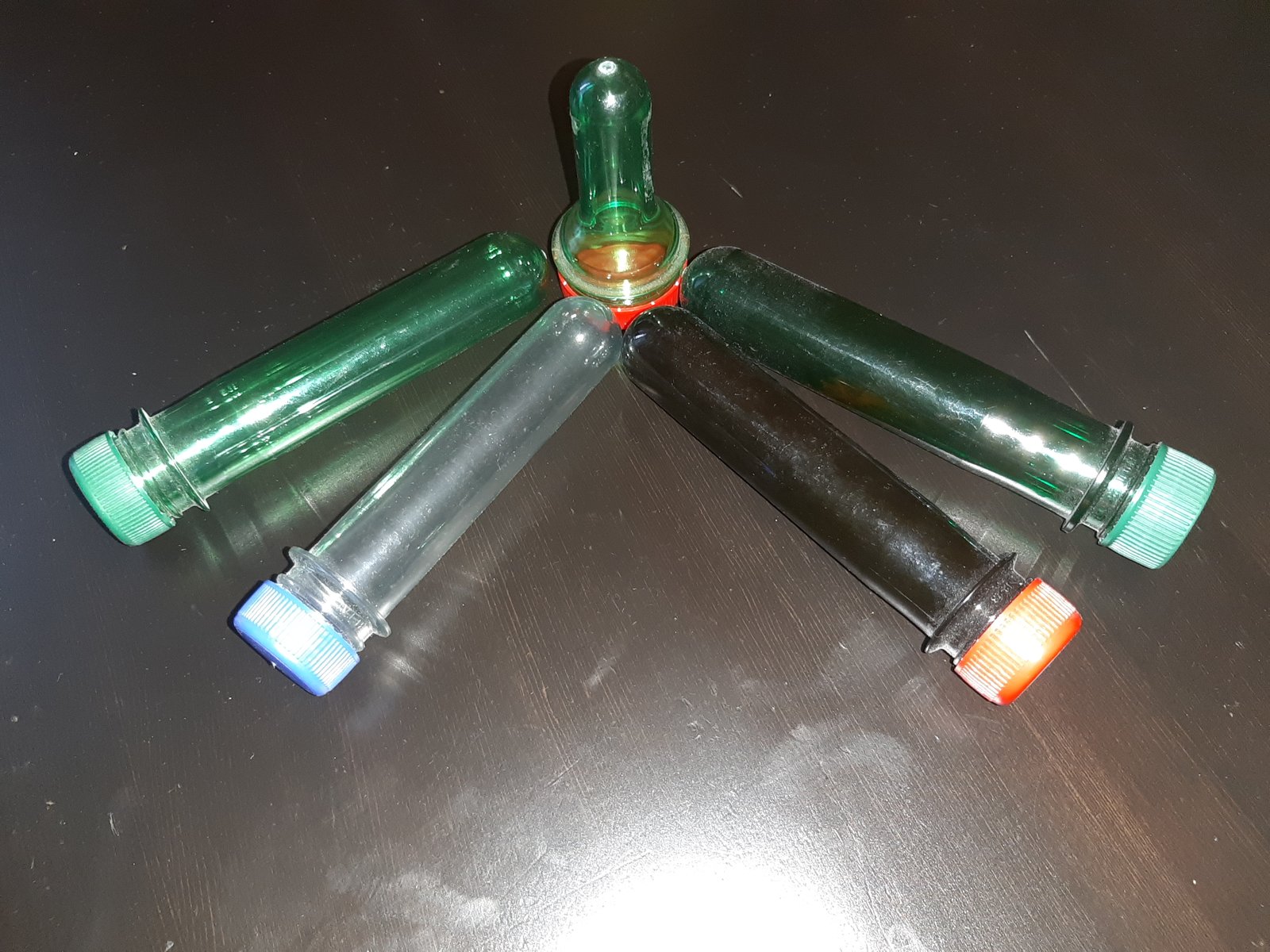
How Does PET Preform Gate Design Affect the Bottle Base?
In stretch blow molding, the closed end of the preform forms the base. Matching gate positions make it easier to compare cavities. If a mark looks rough or sits to one side, set that sample aside with its cavity ID; its bottle may add another useful piece of evidence.
At the inspection bench you are looking at a part that has already been heated and stretched. Keep the original preform: the finished bottle cannot answer every question about its own history.
What Does the Gate Control in a PET Preform?
There are two separate checks. First look for differences between cavities, then measure the feature that differs.
Compare the Mark Across Cavities
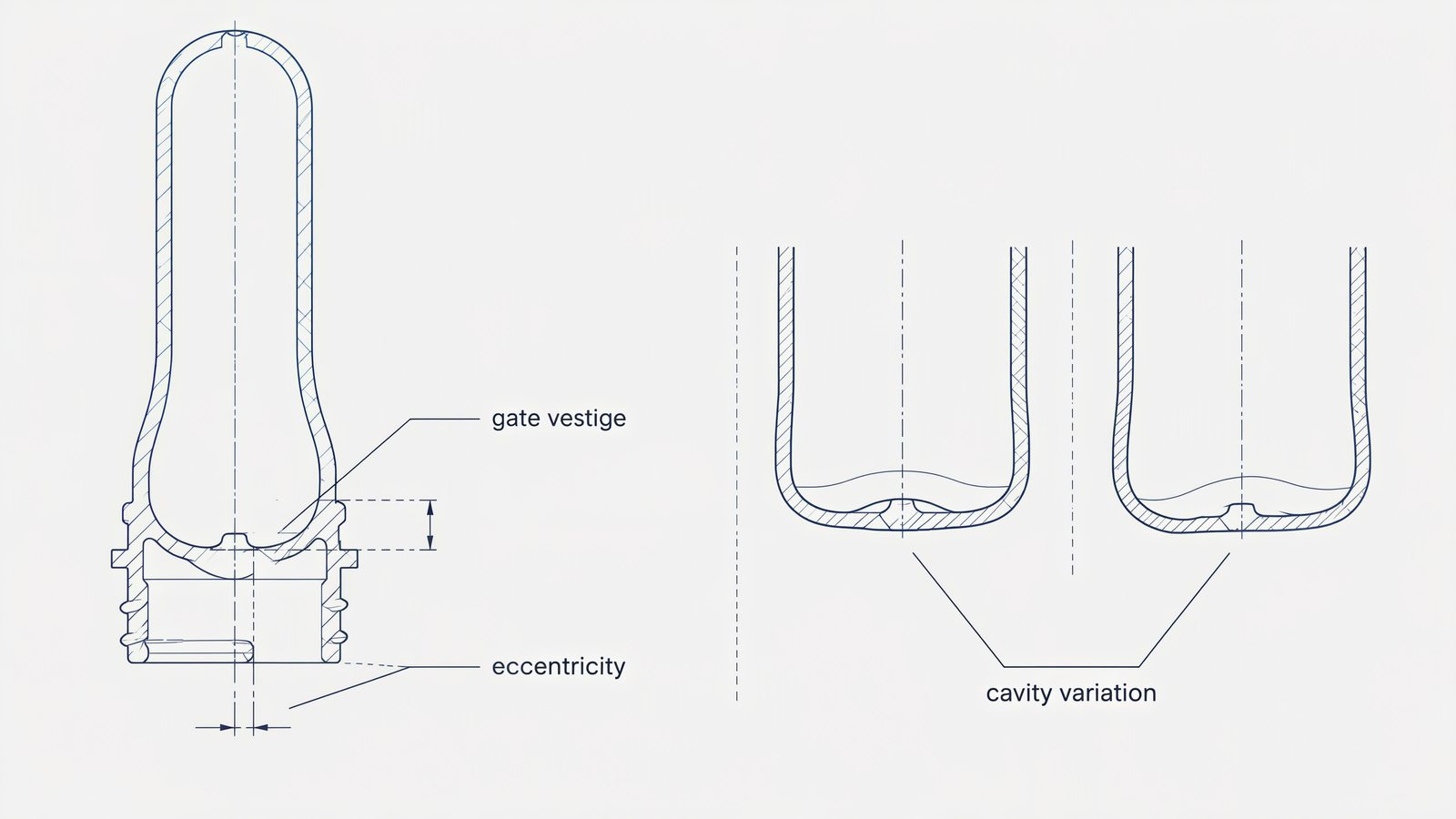
Lay out several samples with the cavity IDs visible. Compare gate position to the centerline and look for a vestige that differs in shape or surface finish. Keep the ID on the sample; without it, tracing a later bottle variation is much harder.
Look at the surrounding closed-end material, not just the gate. Flow balance and cooling in the PET preform mold shape how each cavity forms this area.
Separate Vestige Height from Gate Offset
The vestige is the small projection left where material entered. Its height and its position answer different questions: a tall vestige may still be centered, and a short one may sit to one side. Calling either sample a “bad gate” throws away that distinction before anyone has measured it.
Open the preform drawing at the gate detail. Is there a reference surface for the height measurement? If that detail is missing, settle it with the inspection team. Two readings taken from different starting points will not tell you much about cavity consistency.
Height runs out from that reference surface; offset runs sideways from the preform axis to the gate center. A phone held at an angle can make the mark look displaced, so square up the view before comparing photos. For the actual dimension, use the inspection setup agreed for the drawing.
How Does the Blow Mold Change PET Bottle Base Formation?
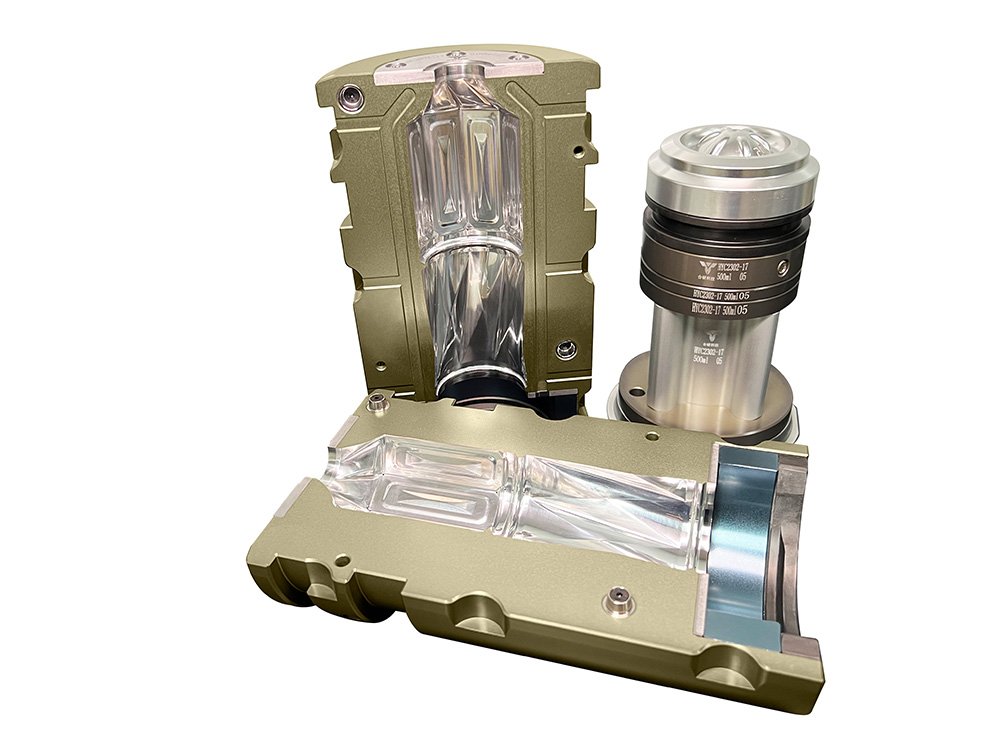
Even a preform with a centered gate can leave the blower with an uneven base. One side may heat differently, or the stretch rod may take an off-center path. The blow mold geometry sets the final cavity shape, but it does not erase differences in how the material reaches that shape.
The base insert and cooling also affect the result. Compare a deep punt and support ring with its own drawing; a flatter bottom has a different reference.
Record preform observations separately from bottle observations. A gate difference visible before blowing belongs with the preform. When those samples match but the bases do not, compare the oven and blower conditions. Preform cooling sets part of the starting condition, so cooling-channel design belongs in that review too.
Which PET Bottle Gate Vestige Measurements Help Separate the Causes?
Keep the sample trail intact before comparing results. Otherwise, a useful difference can disappear into a tray of mixed parts.
Keep Each Sample Traceable
A shift team can repeat this sample check:
-
Give each sample a cavity ID and a production time on its record.
-
Take a straight-on photo of the closed end with the centerline identified.
-
Check the vestige against the drawing with the agreed method.
-
Blow a matched group and write down the settings.
-
Keep the cavity marks with the bottles while checking base shape and orientation.
Read the Cavity Results Before Pooling Them
Suppose you take five preforms from each of four cavities: 20 pieces. Keep them separated through a controlled blowing trial and record the blower station for each bottle. The injection cavity number and the blowing station number are different things; writing down only one leaves half the trail missing.
Imagine three bottles from cavity 4 share the same base offset, while across the other three cavities only one bottle does. Pool everything and the figure is 4 out of 20, or 20%. Split it by origin and you see 3 out of 5 against 1 out of 15. Now there is reason to take another set from cavity 4 and check whether its preforms differ too. Estimating the production reject rate would need a larger, representative sample.
What if all the affected bottles came through one blower station, despite different injection cavity IDs? That changes where you look next. Check their heating history too, because the conspicuous gate mark may be unrelated to the offset.
Use the plant’s approved method for base or wall thickness. Hold bottle orientation, measurement point, and instrument steady from sample to sample. A photo documents visible shape; measurements assess specified tolerances.
When Should You Change the PET Preform Gate Design?
Repeated gate measurements outside the drawing requirement deserve a design discussion, especially when the same cavity’s bottles share a base pattern. Bring the matched samples. With just one unusual bottle on the table, there is too much left to guess.
A problem that disappears on the next shift deserves a different question. What changed while the tooling stayed the same? Compare those runs before approving a revision. The answer may lie in reheating or blowing rather than the gate detail.
Put an accepted sample beside the trial parts. Measure the same base locations on each, using the agreed method. Keep the settings with the results so a later shift can repeat the comparison instead of relying on someone’s memory of a good bottle.
What Should You Check Before Changing the Gate?
Gather the drawing and the matched samples with their production records. Ready to discuss the gate geometry? Send us the details with an acceptable sample and the parts that concern you. That comparison gives us a much better place to start.
Related reading: PET bottle shoulder design and what it means for high-speed labeling.
FAQ
Can the Gate Mark Be Removed Completely?
The gate leaves a molded feature at the injection point. The drawing and accepted sample define the expected finish for that preform.
If a sample has been trimmed, say so on its label and keep an untouched piece beside it. The reviewer needs to see the molded condition too.
Does a Larger Gate Always Improve Bottle Base Quality?
No. Flow, cooling, preform geometry, and blowing conditions affect the base too. Without evidence that the gate is responsible, changing its size adds another variable.
Ask what the proposed diameter change is meant to achieve. An appearance concern and an injection-filling concern need different evidence.
Why Do Cavities Produce Different Bottle Bases?
A cavity difference may originate in injection or cooling. It can also appear later in the oven or blower. Match each bottle to its preform record before deciding which stage needs attention.
What Should Be Sent for a Gate Design Review?
Send the drawing, a clear gate close-up, cavity IDs, and matched bottle-base photos or samples. Include production time and process settings.
Send an acceptable sample alongside the questionable one. Label both. That gives the review a physical reference instead of relying on someone’s recollection of the last good run.