
A linerless bottle cap closes without a gasket, so no separate liner has to be inserted before the cap goes on the bottle. The seal is formed by an integrated plastic feature that presses against the bottle neck. That shifts the whole sealing burden onto the mold: the sealing geometry, the thread, the wall thickness and the material shrinkage all have to land in the right relationship.
This article explains how a linerless seal actually works, the three mechanisms in common use, and the six points a cap mold must control so that every cavity seals the same way.
What Are Linerless Bottle Caps?
The term “linerless” describes caps whose seal is made from an integral plastic part that contacts the bottle neck. No separate liner is used inside the closure, and the caps are typically molded from PP or HDPE.
| Comparison | Lined bottle caps | Linerless bottle caps |
|---|---|---|
| Sealing component | Separate liner or gasket | Molded sealing feature |
| Manufacturing | May require liner insertion | No liner insertion |
| Structure | Cap plus liner | One-piece closure |
| Design focus | Liner selection and compression | Geometry and dimensional fit |
Typical applications for these closures are bottled water, beverages, food, personal care and household products.
How Do Linerless Bottle Caps Create a Seal?
Direct Contact Between Cap and Bottle Neck
An internal feature of the cap is pressed against a surface on the bottle neck, such as the bore or the top of the neck. That surface has to be contacted continuously around the circumference. A single interrupted contact point becomes the leak path.
Compression and Elastic Deformation
When the closure is seated, the sealing feature deflects or compresses and generates contact pressure between itself and the neck surface. The seal therefore depends on controlled interference, not on how hard the cap feels when it is tightened.
Controlled Dimensional Fit
The cap still has to screw on easily, yet enough sealing interference must be designed into the cap seal features, the neck and the thread. Those three sets of dimensions are validated together, which is why the drawing review matters as much as the mold build.
Common Linerless Sealing Mechanisms
Plug Seal
A plug seal enters the bottle opening as a cylinder. The outside diameter of the plug is matched to the bore of the neck opening to provide the required seal interference.
Flexible Lip / Crab-Claw Seal
When the cap is tightened against a surface of the neck, the flexible lips travel until they contact that surface. Lip thickness, angle and material determine how far they travel. The neck surface must be undamaged for the seal to repeat.
Molded Ridge Seal
Annular ridges are designed to contact and seal against the lip of the bottle. The important design parameters are the height of the ridges and the spacing between them.
These approaches are not interchangeable. Selection depends on neck geometry, material, internal pressure and the sealing requirement of the package.
What Must Cap Mold Design Control?
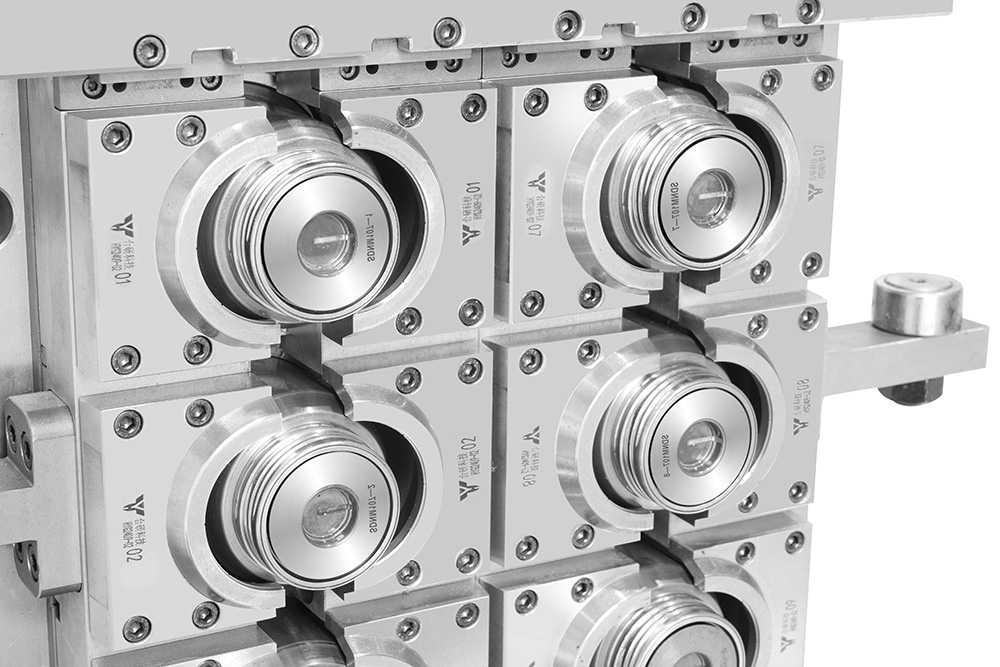
Six points have to be controlled in the mold design if the caps are to function consistently in production.
Sealing Geometry and Precision
Core and cavity dimensions form the plug, the lip and the ridges. Surface finish and tolerances must be specified, and flash and deformation controlled. What the mold can actually hold is covered in PET bottle cap mold accuracy.
Thread Design and Engagement
Thread pitch, profile and engagement must allow the closure to reach the intended seal compression. Application and removal of the cap on the designated bottle have to be tested, not assumed from the drawing.
Wall Thickness and Material Shrinkage
Wall thickness has to be controlled and transitions made suitable for the resin. Uneven shrinkage can pull the sealing ring out of round, and shrinkage allowances must follow the actual resin grade rather than a generic value.
Hot Runner and Gate Design
The hot runner has to fill in a balanced way, and the gate position must let thin functional elements such as sealing lips fill properly. Balanced filling is the foundation for consistent cavity-to-cavity results.
Cooling System Design
Cooling of core and cavity elements is distributed through coolant channels so that heat is removed evenly. Cooling time must be long enough for the parts to stay dimensionally stable after ejection.
Venting, Ejection and Mold Maintenance
Vents must let air escape as fine details fill. Ejection has to be designed so that threads and lips are not bent or torn; the options are compared in bottle cap mold ejection system. Replaceable inserts ease maintenance, but they must meet the approved dimensions after replacement.
Why Bottle Neck and Cap Compatibility Matters
Two neck dimensions carry most of the risk: I, the inside diameter of the neck, which governs plug fit; and T, the outside diameter of the thread on the neck, which governs thread compatibility.
For a PET neck finish conversion, an accurate cap drawing and an accurate neck drawing are both required. The quality of the bottle rim, including flatness and surface finish, and the quality of the thread, including geometry and tolerance, have to be checked. The complete packaging system of bottle, cap and capping equipment is then tested together.
Neck finish selection itself is covered in how to choose the right PET neck finish before ordering a preform mold.
How Multi-Cavity Mold Design Affects Seal Consistency
An undersized plug from one cavity can disappear inside the spread of plug sizes coming from the other cavities. Average values hide exactly the cavity that will leak.
A balanced hot runner helps distribute melt evenly. Independent temperature control for each cavity and separate cooling circuits are highly recommended for sealing-critical closures; the reasoning is set out in multi-cavity cap mold temperature control.
Dimensional and functional checks of produced parts have to be documented cavity by cavity. After inserts in a cavity are changed, parts from that cavity must be checked again before release.
Quality Control and Testing for Linerless Caps
During stable production on the injection molding machine, threads and sealing surfaces of sampled caps are measured dimensionally. The caps are then closed on filled bottles and the required application torque and removal torque are measured, and the packages are checked for leaks. Results are recorded by cavity.
Filling temperature, filling pressure, storage conditions and transport conditions all have to be defined for the test. A dry surface immediately after capping does not by itself guarantee a sealed package for the whole intended use of the product. Common failure modes and their causes are reviewed in injection-molded PET cap defects.
How HEYAN TECHNOLOGY Supports Custom Cap Mold Projects
Start a custom cap mold review with the cap drawing and the neck drawing, the selected resin, sample parts and the desired output. Hot runner layout, independent temperature control, cooling and replaceable inserts are then discussed against that data. Machine, auxiliary equipment and automation requirements for the injection molding system are included in the same review, and trials are run to verify the proposed linerless geometry before production approval.
Reliable sealing comes from integrated geometry, repeatable molding, a suitable bottle neck and testing that proves all three together. HEYAN TECHNOLOGY builds cap molds of this type for 28mm PCO, 38mm, 48mm and custom thread closures; contact us to discuss a cap design and the mold that has to hold it.
Frequently Asked Questions
Are linerless bottle caps leak-proof?
They can seal reliably when the sealing geometry, bottle neck dimensions, material and capping conditions are matched and validated together.
What materials are commonly used for linerless bottle caps?
The typical materials are PP or HDPE. The grade is selected for flexibility, stiffness, chemical compatibility and packaging requirements, and sample parts have to be tested for function.
Do linerless bottle caps require special injection molds?
They do. To replicate integrated seals and threads accurately, the mold must allow adequate cooling of the material, compensate for material shrinkage, and reproduce the sealing features precisely.
