
Labeling problems often surface after the bottle artwork is finalized. A shoulder that looks smooth on screen can still cause trouble once the bottle is warm, moving, and running through the labeler. Small differences in shoulder dimensions from cavity to cavity are easy to miss, and they are enough to crease a label.
Treat the shoulder as part of the labeling surface, because that is what it is. Set the shoulder tangent, label overlap, and neck transition as one section in the CAD and review them together, then test production bottles from different cavities.
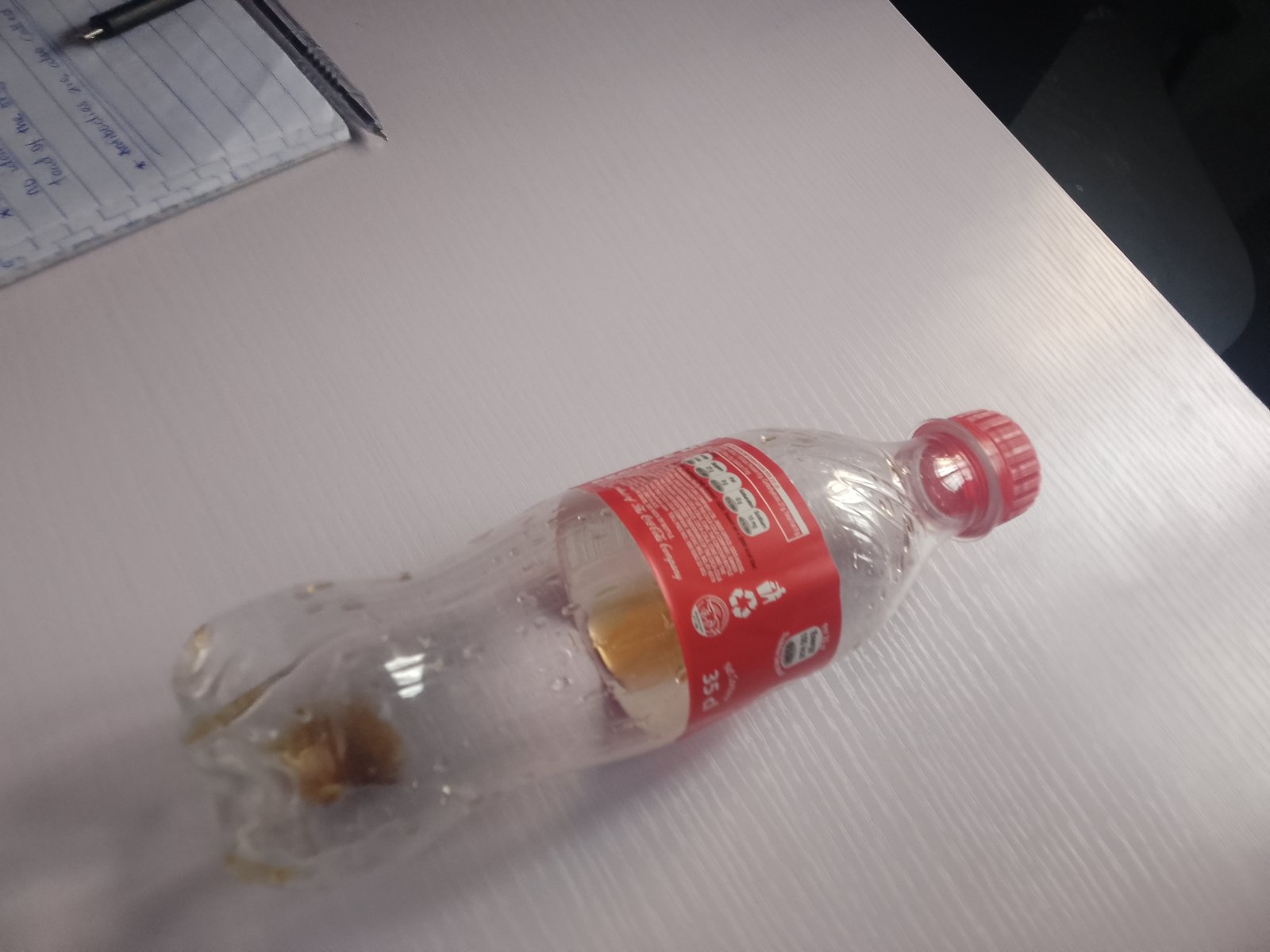
Why Does PET Bottle Shoulder Design Affect Labeling?
The shoulder is where the round body of a bottle meets the neck. For labeling it matters because the label is printed flat and wrapped onto a curved surface, so it has to stay in contact with the bottle and the shoulder needs a continuous, smooth curve. Pressure-sensitive labels need a steady surface area to stick to. Shrink-film labels are more forgiving and can follow small irregularities, but a sudden change in curvature will still pull them out of shape.
Draw these three elements on a single figure during the design review:
| Design item | Line consequence |
| Shoulder tangent | How gently the label leaves the main panel |
| Label datum | Where the top edge sits on each cavity |
| Neck transition | Whether the edge meets a step or a gradual turn |
Tie the datum to something physical, such as a neck support ring or a clear panel line. That is easier to verify than an artwork dimension measured up from the base. When you review a PET blow mold, show how the feature will be checked on a trial bottle.
How Does PET Bottle Shoulder Geometry Change During Blowing?
Each cavity stretches a preform neck a little differently. The axial pull of the stretch rod works against the hoop stretch from the preform body, and shoulder cooling can shift before the PET ever touches the mold steel.
A label may look fine on the filling line, then fold in at the same point on a bottle from another cavity run on the same blow molding process. The outline on the bottle can look similar while the actual tangent differs.
This is a bottle review issue. Adjusting labeler pressure after the mold is cut rarely solves it. Go back to the wider process and check how the resin becomes a finished bottle.
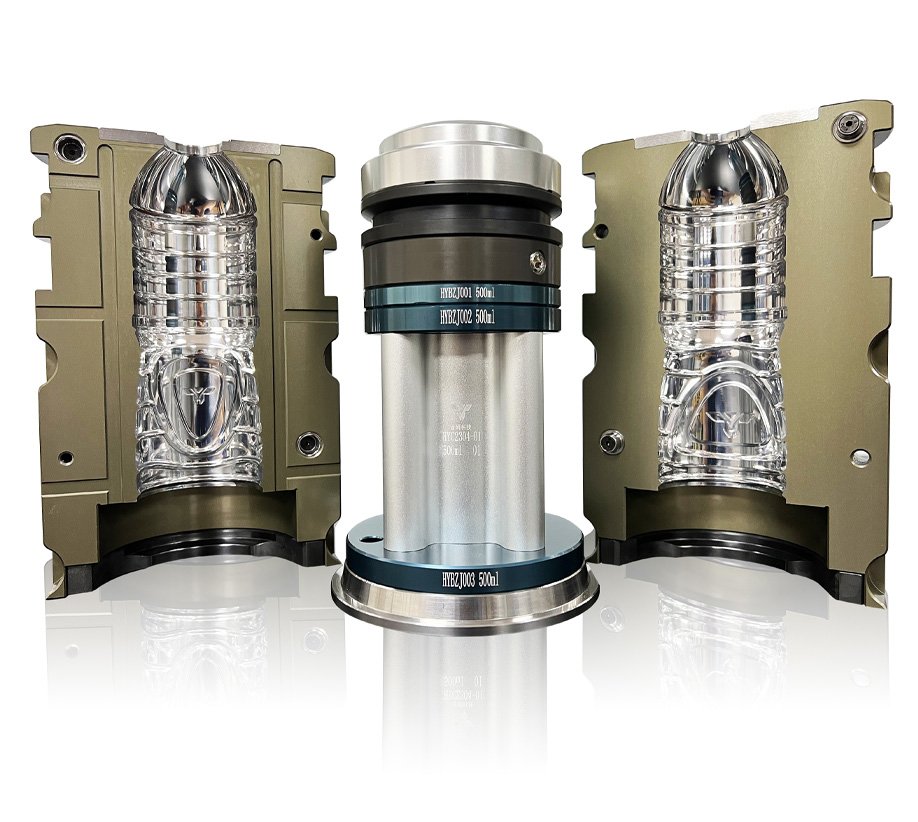
Which PET Bottle Shoulder Dimensions Matter on a High-Speed Labeling Line?
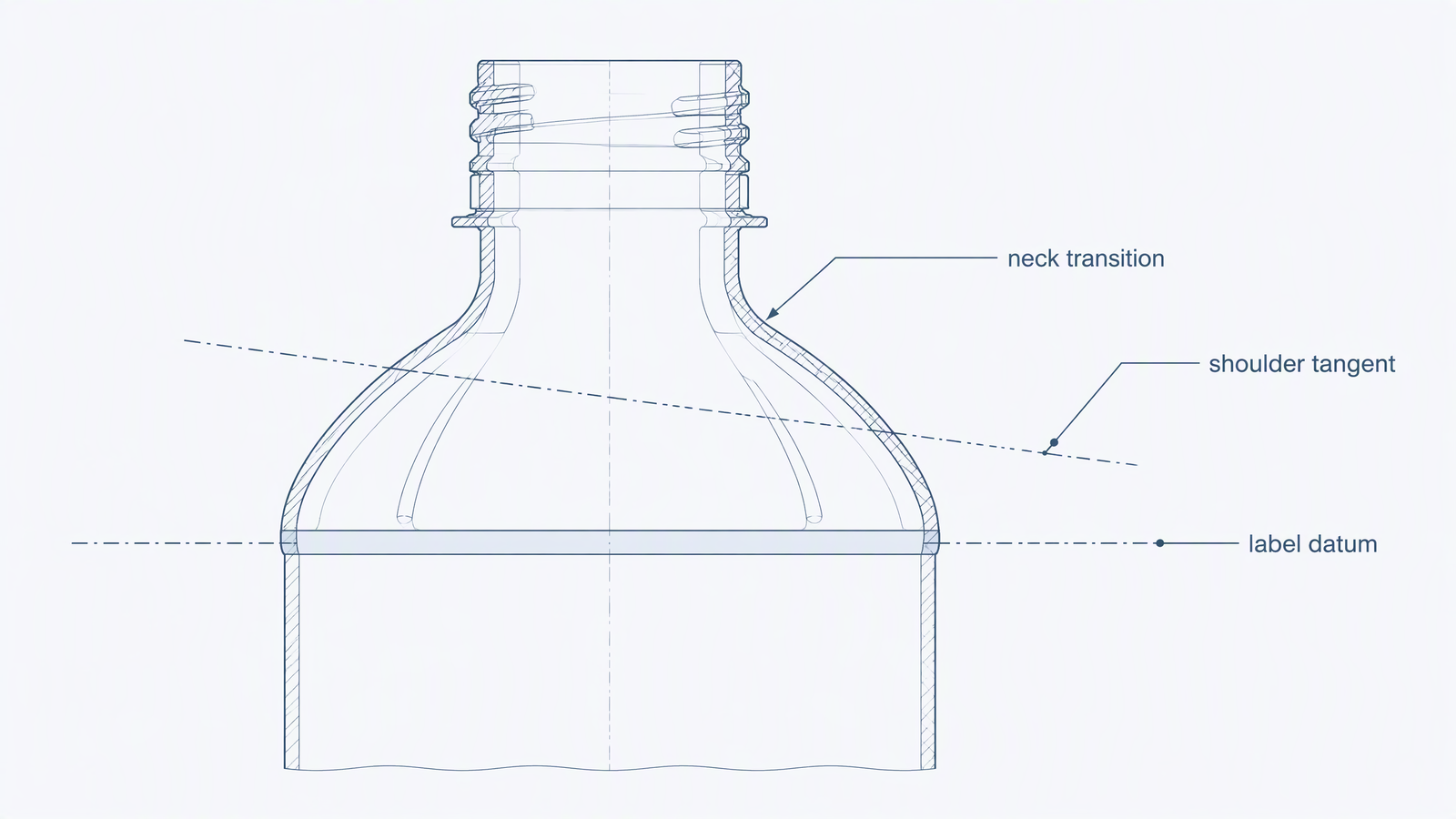
Does Shoulder Radius Control Label Contact?
Cross-check every report. If a radius value is copied from another bottle or drawing, verify where the cylindrical panel ends and the curved shoulder begins. Measure from the same point against the panel datum on your trials, and record a value for each cavity. A 1 mm difference may be invisible on a long, tall bottle, but on a short one it can create a visible edge on the label.
Where Should the Label Datum Sit?
Pick a reference point the label line can measure from, usually the neck ring. It is easier to measure than the base, where push-up variation changes the apparent height.
On a 500 ml bottle, a 92 mm wide label with 3 mm top overlap needs about 89 mm of panel height below the shoulder tangent. If one cavity puts the tangent at 87 mm, the label reaches the curve before it has fully set. Extra application pressure may hold it for a shift, but resin or ambient-temperature variation will soon open the edge again.
How Does the Neck-to-Shoulder Transition Behave?
The neck and shoulder stretch at different rates. A short transition pulls the top edge upward and leaves an unbonded strip; a long one puckers the label or shifts the bottle’s visual balance.
How Can You Validate PET Bottle Shoulder Design Before Mold Release?
A one-page review sheet is enough for a machine-side check.
-
Freeze the datums. Define the exact neck, panel, and shoulder-tangent reference points on both drawings.
-
Check the overlap window. Compare approved label height with stable panel height and leave room for stretch and application variation.
-
Compare cavity sections. Take a section or scan from at least two cavities. Compare the tangent and neck transition together.
-
Measure wall distribution. A thin shoulder can move during labeling. Use the same control points as PET bottle wall-thickness measurement.
-
Run the line-speed trial. Use the label stock’s intended speed. Note wrinkle location, cavity, bottle temperature, label height, and reject reason.
A simple pass/fail rule: inside the specified overlap range, the label must sit within the boundary; the label top must fall below the shoulder tangent; and no cavity may produce repeatable wrinkling at the specified production speed. Do not average across cavities. It is the worst bottle that stops the line in the end.
What Bottle Design Choices Create Label Wrinkles?
A sharp turn looks clean in CAD but can be hard on a label. A softer turn or a lower edge is usually easier for the label to follow.
Other key measurement references vary too, notably the base push-up height. Where the process allows, use the neck reference.
A drawing that extends to the nominal panel edge may just reach the shoulder of a warm bottle. Keep the artwork boundary inside the measured overlap window. As with the geometry, label pressure, bottle temperature, and conveyor speed can all create wrinkles before any mold change is made.
Plan the Next PET Bottle Design Review
Put the bottle drawing, label height and overlap, neck finish, resin type, target output, and labeling method in the review pack. Discuss shoulder geometry within the real constraints of your injection molding system.
Related reading: PET preform gate design and how that closed end shapes the bottle base.
FAQ
Is a Larger Shoulder Radius Always Better for Labeling?
No. A larger radius can improve contact, but it takes up panel height and may change the bottle’s look. Choose it with the label edge, bottle height, and stretch path in view.
Does rPET Change PET Bottle Shoulder Design?
rPET tends to run in a narrower process window and can expose cavity-to-cavity variation. Check the shoulder on bottles made from the exact material mix you plan to run.
How Much Label Overlap Should Reach the Shoulder?
Set the overlap from the label die line and measured shoulder tangent. A small planned margin is easier to control than letting the edge find the curve by chance.
Can Small PET Bottles Use the Same Shoulder Rules?
The same principles apply, but the tolerance is tighter on short shoulders and labels. Measure more cavities and run the line-speed test earlier.
Can Shoulder Geometry Be Changed After Mold Cutting Starts?
Some surface edits are simple. A shoulder geometry change can reach the preform, the section, the stretch balance, and the labeling datum, so review the full bottle window before approving it.