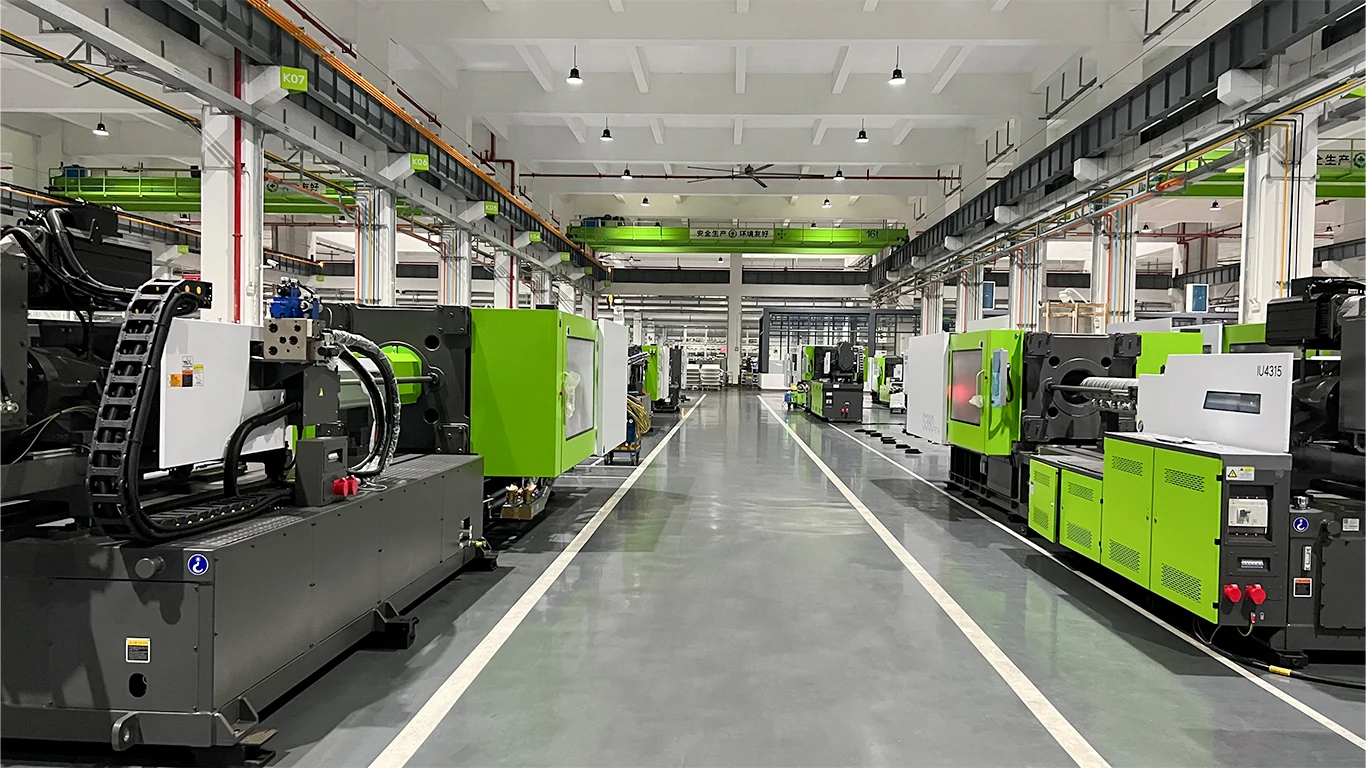
Many buyers start with a single mold or machine, then realize their production goals need a complete line. Knowing what a full PET bottle production line includes — and whether you actually need one — can save time and money.
What a Complete Line Includes
A typical PET bottle production line has six main parts: the preform mold that defines bottle shape, weight, and neck finish; the injection molding machine that produces the preforms; auxiliary equipment like dryers, dehumidifiers, chillers, and compressors; the blow mold that shapes the preform into the final bottle; the blow molding machine that heats and blows preforms; and the conveyor and packaging system that moves finished bottles to the packing area.
When You Need a Complete Line
New factory setup. If you have no existing equipment, a complete line is the only practical path. Key decisions: matching mold cavity count to machine shot weight and clamping force, sizing auxiliary equipment to your target output, and planning the factory layout for material flow and operator access.
Expanding existing capacity. If you already have injection or blowing equipment but need more output, options include adding a higher-cavity mold to your existing machine (if capacity allows), adding a second blowing machine to match increased preform output, or upgrading auxiliary equipment to handle higher throughput.
Adding a new bottle type. If you produce water bottles and want to add edible oil or cosmetics, you will probably need a new preform mold with different weight, neck finish, or wall thickness. You may also need a new blow mold and hot runner and cooling adjustments for the new material.
Common Integration Challenges
| Challenge | Cause | Prevention |
|---|---|---|
| Preform-bottle mismatch | Mold designed independently without cross-checking | Use the same supplier for both molds, or provide bottle sample to both designers |
| Output bottleneck | Injection output exceeds blowing capacity, or vice versa | Calculate total system throughput before ordering, not per-machine |
| Cooling insufficiency | Chiller sized for one machine, not the full line | Size chiller based on total mold heat load plus safety margin |
| Material contamination | Shared dryer between different resin types | Dedicate dryers per resin, or implement thorough purge protocols |
Single vs. Complete Line: Cost Comparison
| Approach | Initial Investment | Flexibility | Risk |
|---|---|---|---|
| Single mold | Low | High | Low |
| Mold + matched machine | Medium | Medium | Medium |
| Complete line | High | Low | High if bottle design changes |
How HEYAN Approaches Line Design
We do not start with equipment lists. We start with your bottle sample and production target.
Bottle analysis covers weight, wall thickness, neck finish, and material. Preform design is optimized for your specific bottle geometry. Mold specification sets the cavity count (2 to 96) based on your output and machine. Machine recommendations include PET injection machines with shot weights from 800g to 6,000g and blow molding machines from semi-automatic (400 to 800 bottles per hour) to automatic models rated at 2,000, 4,000, or 6,000 bottles per hour on an 800ml reference. Auxiliary sizing matches dryer, chiller, and compressor to total system load. The layout proposal covers factory floor planning for efficient material flow.
This prevents the common mistake of buying a high-cavity mold your machine cannot support, or a high-output line your cooling system cannot handle.
Planning a new line or expansion? Send your bottle sample and production target. We will evaluate your current setup (if any) and provide a matched configuration.